
Tunisia

Tunisia - where the sun embraces the sea and history whispers through the alleyways, a country that inspires the mind and touches the soul.
Tunisia, a country full of fascinating contrasts and timeless beauty. From the golden sandy beaches along the Mediterranean coast to the sandy expanses of the Sahara, from the bustling bazaars of the medina to the ancient ruins of Carthage - Tunisia is an incomparable mix of history, culture and nature.
Immerse yourself in its rich past, savour the diverse cuisine and experience the warm hospitality of this magical country.
Join us on a journey through the fascinating facets of Tunisia and discover why this country has long captivated travellers from all over the world.

- Location: On the north African coast of the Mediterranean Sea
- Area: 163,610 km²
- Population: Around 11.8 million people
- Capital: Tunis
- Official language: Arabic
- Currency: Tunisian dinar (1 Tunisian dinar = 1000 millimes)
- Culture: Colourful art, traditional music, as well as craftsmanship and folklore
- Cuisine: Couscous, tajine, harissa and mezze, accompanied by baklava and makroudh
- Activities: Exploring historic sites, camel trekking and water sports
Operators & routes from / to Tunisia


Tyrrhenian Sea:
- Tunis ↔ Civitavecchia
- Tunis ↔ Genoa
- Tunis ↔ Palermo Sicily
- Tunis ↔ Salerno
Sights
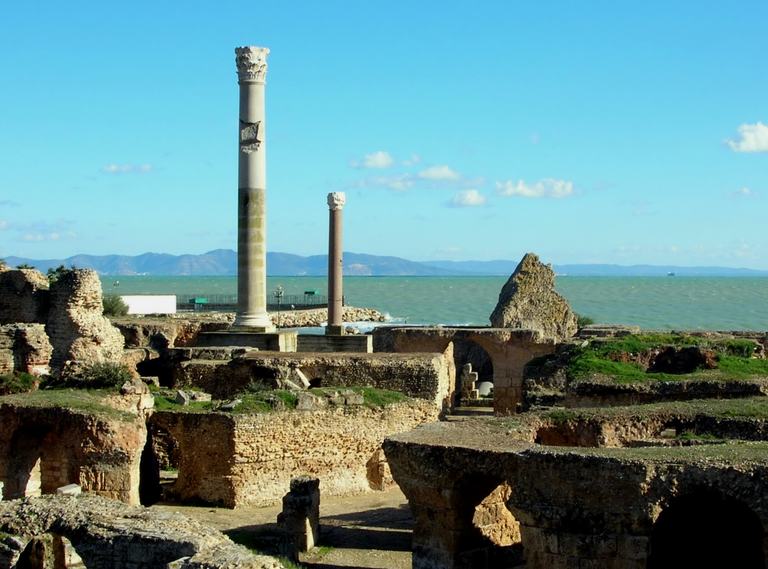
Photo: Bernard Gagnon (CC BY-SA 3.0)
The ancient ruins of Carthage are a fascinating testament to the rich history of Tunisia. Originally founded by the Phoenicians, Carthage reached its heyday as a powerful trading city in the western Mediterranean Sea. Later it was conquered by the Romans and developed into an important provincial capital. Today visitors can explore the remains of temples, baths, villas and the impressive Roman amphitheatre. The ruins offer not only an insight into the ancient world, but also a breathtaking view of the Mediterranean Sea and the surrounding landscape.
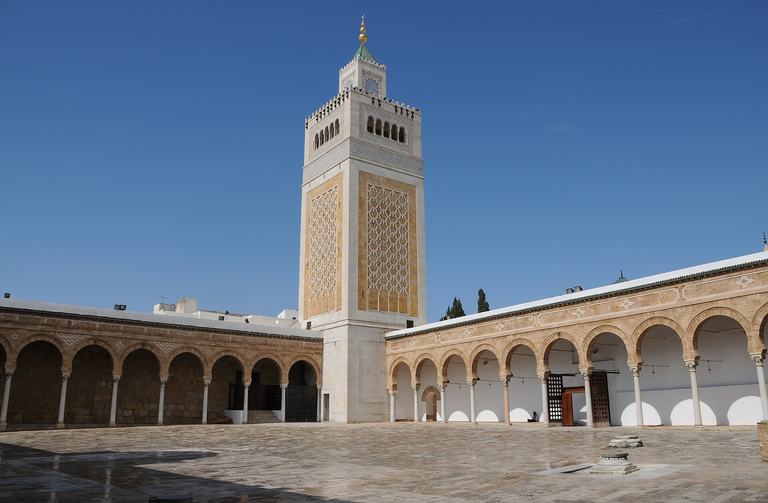
Photo: Citizen59 (CC BY-SA 3.0)
The medina of Tunis is a lively and colourful labyrinth of narrow alleys, historic buildings and traditional souks. As one of the largest and best-preserved old towns in North Africa, the medina of Tunis is a UNESCO World Heritage Site and a fascinating destination for visitors. Here you can stroll through the souks, where traders offer everything from spices and textiles to handmade crafts. Highlights include the Zitouna Mosque and the Bab el Bahr market, where you can experience authentic life in Tunisia's capital.
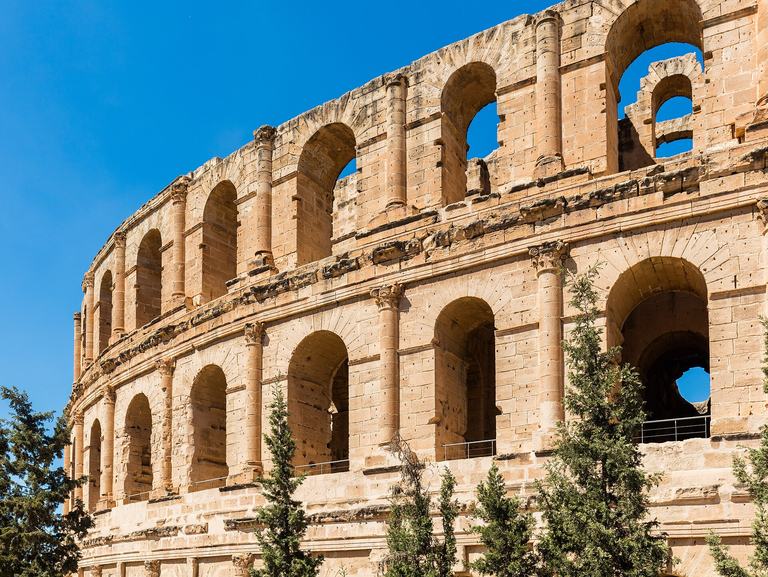
Photo: Diego Delso (CC BY-SA 4.0)
The amphitheatre of El Djem, also known as the Colosseum of North Africa, is one of the most impressive Roman structures outside Italy. With a capacity of up to 35,000 spectators, the amphitheatre once hosted gladiator fights, animal hunts and other public events. Today visitors can explore the well-preserved ruins and admire the imposing architecture. From the upper tiers there is a breathtaking view over the surrounding landscape as far as the Mediterranean Sea.
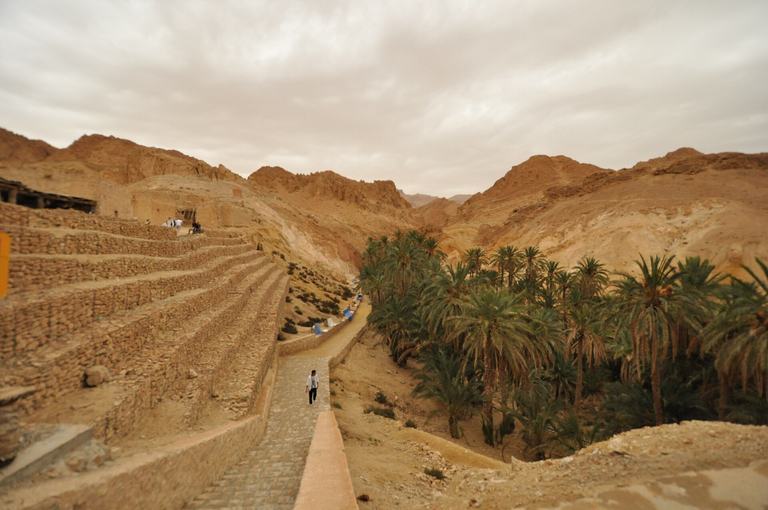
Photo: anagh (CC BY-SA 3.0)
The oases of Tozeur and Chebika are true treasures in Tunisia's arid desert landscape. Here, surrounded by lush palm groves and clear springs, visitors can experience an oasis of calm and beauty. In Tozeur you can explore traditional mud-brick houses and historic irrigation channels, while Chebika impresses with its spectacular waterfalls and steep gorges. A walk through these oases is like a journey into another world and offers insight into the traditional way of life of the local people.
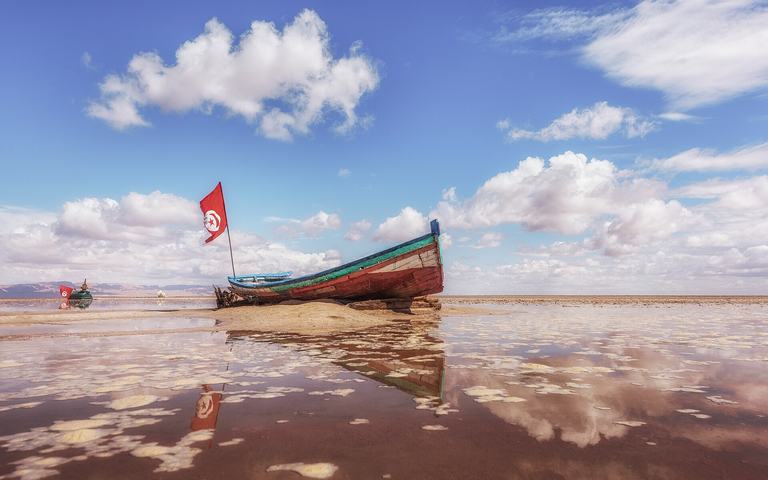
Photo: Atef Ouni (CC BY-SA 4.0)
The salt lakes of Chott el Djerid are an impressive natural sight in southern Tunisia. These vast salt lakes stretch to the horizon and offer a fascinating view, especially at sunset, when the sky glows in brilliant colours. The salt lakes are not only scenically appealing but also an important habitat for birds and other animals. Birdwatchers can spot a wide variety of species here, including flamingos, herons and ducks.
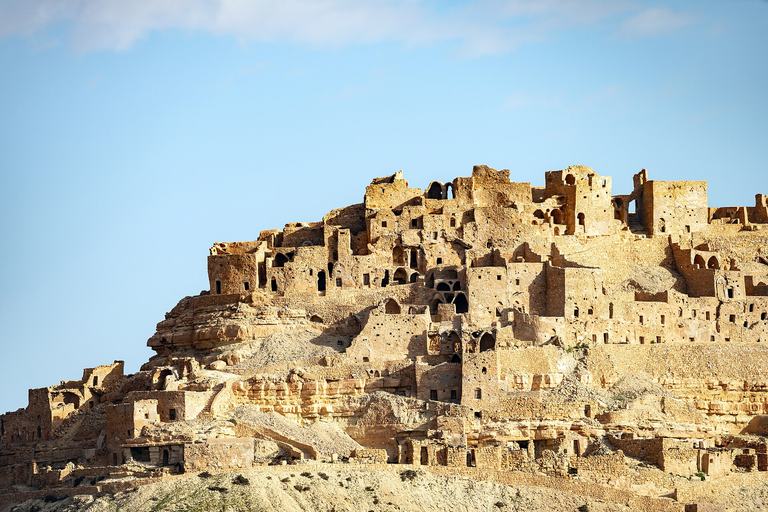
Photo: Skander zarrad (CC BY-SA 4.0)
The Berber village of Chenini, high on a steep hill in southern Tunisia, is a picturesque village with a rich history and fascinating architecture. The traditional mud-brick houses and the impressive mosque offer insight into the traditional way of life of the Berbers and their unique building art. A walk through the village's narrow alleys offers a breathtaking view of the surrounding landscape and the neighbouring Berber villages.
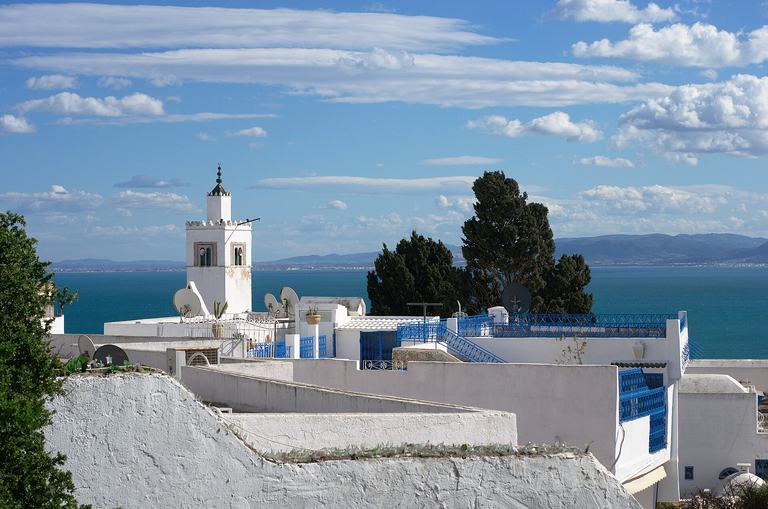
Photo: Habib M'henni (CC BY 4.0)
The village of Sidi Bou Said, known for its whitewashed houses with blue doors and windows, is a picturesque coastal village in northern Tunisia. The charming alleys, planted with bougainvillea and jasmine, invite a relaxed stroll. Visitors can sit in the cosy cafés, enjoy the view of the sparkling Mediterranean Sea and admire the traditional Tunisian architecture. Visiting the house of the writer Baron d'Erlanger and the Sidi Bou Said Museum offers an insight into the history and culture of the village.


Cultural facts
The art of diversity:
In Tunisia, people value the balance between tradition and modernity, as well as between work and leisure. Rather than striving for individual success, the well-being of the community often takes centre stage, whether in projects, businesses or family matters.
Hospitality and sociability:
Tunisian culture is marked by warm hospitality, which regards guests as honoured visitors and welcomes them with open arms. Family and social bonds play a central role in the life of Tunisians, and shared meals are often an occasion to gather, share and celebrate.
Festive traditions and culinary delights:
In Tunisia, traditional festivals and celebrations are observed with great devotion. Tunisian cuisine plays an important role here, shaped by aromatic spices, fresh ingredients and cultural influences. From couscous and tajine to sweet treats such as baklava, Tunisian dishes offer a rich variety for the palate and the senses.
Coffee and conversation:
As in other cultures, drinking coffee together is a popular tradition in Tunisia. It serves as an occasion to meet, chat and spend time together. Stories are exchanged, and current events are discussed, nurturing social life.
Respectful communication:
In Tunisian conversations, courtesy and respect are valued. Sensitive topics are often avoided in order to prevent conflict and preserve harmony. Instead, conversations often focus on everyday topics such as family, food and cultural events, which create a positive and cheerful atmosphere.
Fun facts
Jasmine, the fragrant landmark:
Tunisia is one of the largest producers of jasmine in the world, exporting tonnes of fragrant flowers every year for use in perfumes and other products.
The cradle of the Carthaginian empire:
Tunisia is home to the ancient city of Carthage, which was once one of the most powerful cities in the Mediterranean and played an important role in history. Today, visitors can explore the ruins of this former metropolis and immerse themselves in the past.
Film set for Star Wars:
Tunisia's fascinating desert landscape has attracted not only filmmakers but also Star Wars fans. The Sahara Desert served as the backdrop for various scenes of the popular film series, including the legendary city of Mos Eisley.
The art of tea drinking:
In Tunisia, tea is an integral part of the culture. Traditional Tunisian mint tea, also known as "Atay", is often served at social gatherings and symbolises hospitality and warmth.
The desert festival:
Every year, Tunisia hosts the "Festival du Sahara", a celebration of the nomadic culture and heritage of the country's desert regions. Visitors can take part in traditional dances, camel races and craft markets and experience the fascinating culture of the desert dwellers.
Seasonal conditions
Summer
Summer days and mild nights:
Tunisia, nestled between the Mediterranean Sea and the Sahara, enjoys long, sunny days and pleasantly mild to warm nights in summer. The sun shines generously over the country, and in the southern regions even the nights can be graced by a gentle glow on the horizon as the sun sets briefly and lights up the sky in an enchanting light.
Refreshing breezes and bright sunshine:
Summer months in Tunisia bring average temperatures between 25 and 35 degrees Celsius, ideal for sun worshippers and adventurers alike. While coastal regions enjoy cooling sea breezes, the desert regions inland can be somewhat hotter. Nevertheless, the warm days invite you to explore the country's diversity and enjoy the beauty of its landscapes.
Summer activities:
Tunisian summers offer a wealth of outdoor activities for adventurers of all kinds. From water sports such as diving and snorkelling in the clear waters of the Mediterranean Sea to hikes through the breathtaking mountains of the Atlas Mountains, there is something for everyone to discover. The country's numerous national parks and nature reserves also offer a unique opportunity to experience the local flora and fauna.
Celebrate summer in Tunisia:
A highlight of the Tunisian summer is the annual Moussem Festival, celebrated in various towns and villages across the country. These traditional festivals are full of music, dance and culinary delights and give visitors the opportunity to experience Tunisia's rich culture and heritage first-hand.
Winter
Winter charm and cosy evenings:
While winter is cold and grey in many parts of the world, Tunisia enjoys a mild and pleasant season. Days are shorter than in summer, but the nights are mild and inviting. The sky often appears clear and bright blue, while daytime temperatures are pleasantly between 15 and 20 degrees Celsius.
Cultural discoveries and historical treasures:
Winter is an ideal time to explore the rich history and culture of Tunisia. The ancient ruins of Carthage, the impressive medina of Tunis and the magnificent mosques of the country offer fascinating insights into the past. With mild temperatures and fewer visitors, travellers can explore the historic sites at leisure and admire the beauty of their architecture.
Outdoor adventures and natural beauty:
Tunisia offers numerous opportunities for outdoor activities and nature experiences in winter as well. Hikes through the picturesque Atlas Mountains or along the coastal paths offer spectacular views and unforgettable experiences. The desert regions in the south of the country are also well worth a visit, and mild daytime temperatures make it a pleasant time to explore the fascinating landscape.
Festivals and celebrations:
Winter in Tunisia is often marked by various festivals and cultural events. The International Festival of Hammamet offers music, theatre and art and gives visitors the opportunity to experience the country's vibrant cultural scene. In addition, local festivities and celebrations are held in the towns and villages across the country, offering a unique opportunity to experience Tunisian hospitality and joie de vivre.
Important information
Best time to travel
The best time to travel to Tunisia is in spring (March to May) and autumn (September to November), when the weather is pleasantly warm and tourist numbers are somewhat lower. These seasons offer ideal conditions for sightseeing, outdoor activities and beach holidays alike. The summer months are popular but can get very hot, while the winter months bring milder temperatures.
Currency
The official currency in Tunisia is the Tunisian dinar (TND). It is divided into 1000 millimes. Cash can easily be exchanged at banks, currency exchange offices and ATMs in larger towns. Credit cards are often accepted in larger hotels, restaurants and shops, but it is advisable to always have some cash on hand for smaller purchases and markets.
Weather conditions
Tunisia has a Mediterranean climate with hot, dry summers and mild, humid winters. The summer months from June to August are ideal for sun worshippers, with temperatures between 25°C and 35°C on the coast and even hotter conditions inland. The winter months from December to February are milder, with average temperatures between 10°C and 20°C.
Entry requirements
Most foreign visitors need a visa to enter Tunisia. This may vary depending on nationality. Travellers should find out about current entry requirements in advance and, if necessary, apply for a visa before travelling.
Culinary highlights
Tunisian cuisine is rich in flavour and variety. Culinary highlights include dishes such as couscous, tagine, harissa and mezze, prepared with a wealth of fresh herbs and spices. Popular sweet treats include baklava, makroudh and sweet tea biscuits. Fresh fish dishes along the coast are also a must for food lovers.